
 Italiano
 Português
 Amazon
 Ebay
Ebay
The Marketing Value of Sample-Size Glass Dropper Bottles
🫙 Introduction
Sample sizes are no longer just “freebies,” but a marketing lever for low-cost customer acquisition and high-conversion repeat purchases. The key to leveraging small bottles for big business lies in four driving forces: consumer psychology, brand premium, usage scenarios, and supply chain strategy.
🫙 Driven by Consumer Psychology
1. Lowering the Barrier to Trying
For most consumers, the biggest obstacle when first encountering a new brand is not the product itself, but the uncertainty about its effectiveness. This is especially true in high-priced skincare products, potent serums, and natural essential oils, where consumers often worry that the product won’t suit their skin type, leading to purchase hesitation.
From a consumer psychology perspective, smaller packaging effectively reduces consumers’ perceived “trial and error costs.” Compared to directly purchasing full-size products, sample sizes allow consumers to gain a real-world experience with less investment, thus reducing purchase pressure. This low-risk experience model is particularly effective for high-value products.
2. Creating a Sense of Scarcity and Exclusivity
Besides reducing risk, small-sized packaging can also create a unique sense of value. Brands design small-capacity glass packaging as “limited-edition trial packs,” “member-only packs,” or “new product trial packs,” using scarcity labels to increase consumers’ desire to acquire them.
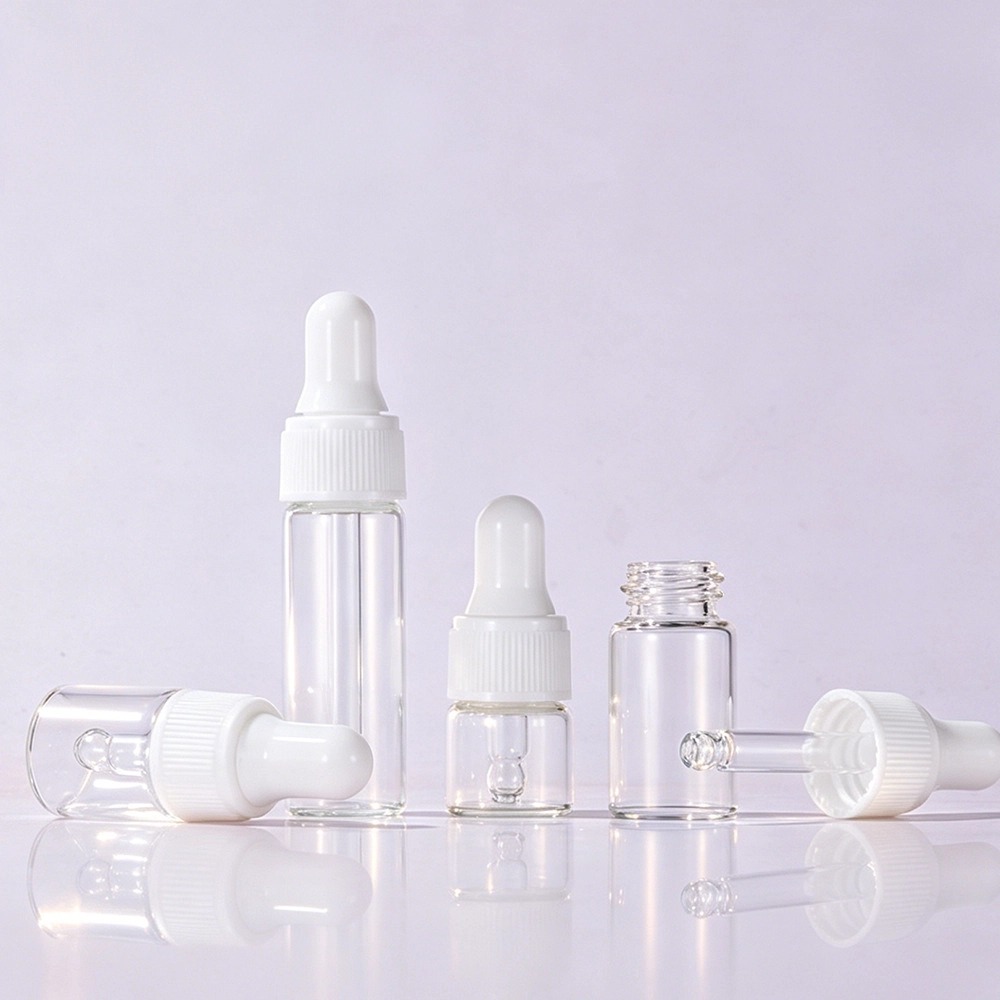
Small and exquisite glass dropper bottles paired with silicone dropper tips and high-transparency glass not only exude a professional feel but also create a high-end laboratory-like skincare experience.
3. Collectibility and Portability Activate Repeat Purchases
Compared to single-use packaging, small-capacity dropper bottles offer significant portability. They meet the need for on-the-go carrying, allowing the product to be used continuously in more scenarios.
As the product gradually integrates into daily life habits, the probability of repurchase increases. Furthermore, many consumers reuse empty bottles for storage and repackaging after use. This reuse extends the packaging’s lifespan and keeps the brand logo constantly in the consumer’s view, further enhancing brand exposure and user loyalty.
🫙 Advantages of Glass Material
1. Material Trust Transfer
Third-party research shows that users rate glass packaging 42% higher than plastic packaging for safety. For active ingredients, colored dropper bottles, with their chemical inertness and light-blocking properties, effectively slow down oxidative degradation.
2. Sustainable Marketing Label
Glass is 100% recyclable with minimal recycling losses, naturally aligning with current ESG consumer preferences. Brands can further design this—users can collect several mini dropper bottles and return them to redeem points or samples of new products.
Lorem ipsum dolor sit amet...
1. Customer Acquisition
Brands leverage various channels such as DTC subscription boxes, offline pop-up sampling, and KOL unboxing/blind box events. Scanning the QR code on the bottle leads to the brand’s official website, where users can choose skin type analysis, age, preferences, and other data, thus accumulating user assets.
2. Experience Conversion
Whether a sample can be converted into a full-size product depends on whether the experience is “just right.” The dropper design ensures precise dosage control—the 3ml (3ml Mini Dropper Vial) with a precision dropper tip allows for accurate dispensing of one drop or half a dropper, reducing the anxiety of wasting money by using too much or too little.
3. Increased Repeat Purchases and Lifetime Value
Industry data shows that brands offering sample sizes see a 2.3 to 3.1 times higher conversion rate to full-size products. The light-blocking and inert properties of the transparent/brown dropper bottle ensure that the sample and full-size product contents are completely consistent in quality, preventing any gap in experience due to packaging differences. The small bottle unlocks not just a one-time purchase, but a leap in value throughout the user’s entire lifecycle.
🫙 Supply chain and Cost Strategy
1. Cost Structure Optimization
The overall cost of a single small-capacity glass dropper bottle is controllable, with ample gross profit margin. The key is selecting low MOQ suppliers, enabling small-batch testing and multiple SKU parallel processing, without tying up large amounts of capital in packaging inventory.
2. Flexible Customization and Differentiation
Small bottles can still convey a strong brand image. Silkscreen logos, hot-stamped product names, matte coatings—even small capacities can accurately convey brand colors or tone.
Easily overlooked details lie in the dropper tip: rubber tips rebound quickly but are prone to aging, while silicone tips are flexible, oil-resistant, and heat-resistant, directly impacting the user’s smoothness.
3. Lightweight Logistics and Warehousing
Small size brings hidden benefits to the supply chain: more bottles can be packed in the same container, significantly reducing cross-border shipping costs; when used as promotional gifts, it adds almost no weight to the package, with marginal increases in logistics costs approaching zero.
🫙 Conclusion
Looking back at the entire article, the sample-sized glass dropper bottle represents a reduction in volume. From the consumer psychology of “zero-barrier trial,” to the “trust endorsement” of the glass material, to the practical path of “new customer acquisition – conversion – repeat purchase,” and the meticulous cost accounting on the supply chain side.
Brands should incorporate small-capacity transparent/brown dropper bottles into their complete SKU planning during the product development phase, rather than hastily producing samples after the full-size product is launched. Early planning means consistent packaging materials, stable formulas, and visual consistency, and more importantly, it means that sampling and data collection can be initiated simultaneously on the first day of launch.
Last Updated: 2026/06/25

 English
  Italian