
 Italiano
 Português
 Amazon
 Ebay
Ebay
How Transparent Glass Enhances Perfume Color Presentation?
💎 Introduction
In the perfume packaging industry, glass is one of the most widely used container materials due to its chemical stability, visual transparency, and high-end feel. Transparent glass, in particular, can fully showcase the true color and luster of the perfume liquid, directly influencing consumers’ first impression of the product.
This article will analyze how transparent glass enhances the color display of perfume liquids through optical properties and design language, and explore its key role in improving brand value and market competitiveness.
💎 Optical Properties and Color Display Principles
1. Light Transmittance and Color Display Principles
High light transmittance allows for the perception of the true color of liquids.
-
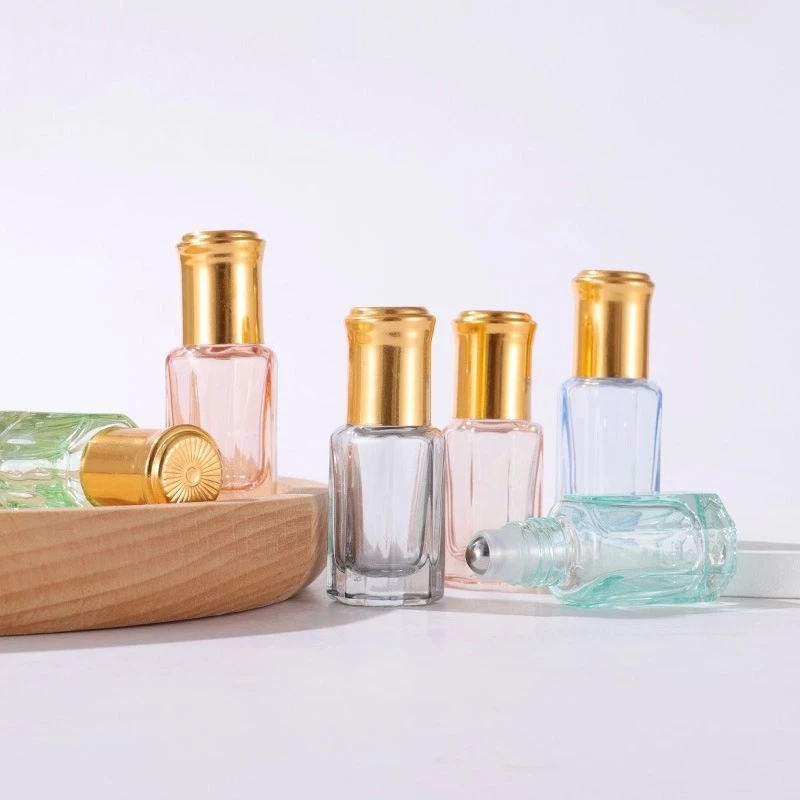
- Transparent glass has extremely high light transmittance, enabling consumers to accurately capture the original color of the perfume liquid. The small-capacity, gold-capped, octagonal, multi-colored transparent rollerball bottle’s transparent body allows the liquid color to be displayed truthfully.
Comparing the color distortion issues of tinted and frosted glass:
-
- Tinted frosted glass: The tint of the glass itself is superimposed, distorting the original color of the liquid.
- Frosted glass: Due to surface scattering, colors become blurry and cloudy, reducing the transparency and vibrancy of the liquid.
A richer visual effect under different lighting conditions
-
- Transparent glass can make liquids exhibit dynamic changes under different light sources such as natural light, warm light, and cool light—it becomes crystal clear under sunlight, gentle and soft under warm light, and fresh and calm under cool light, greatly enhancing the sense of depth in the display.
2. Light Refraction and Liquid Gloss
How Transparent Glass Enhances the “Crystal-like” Appearance of Perfume
-
- Light refracts and reflects as it passes through transparent glass and the perfume liquid. The octagonal facet design creates multiple refractive surfaces, giving the liquid a gem-like crystalline luster.
Visual Layers Created by Light Passing Through Glass and Liquid
-
- Refraction: Each facet disperses and redirects light, making the liquid brighter and more fluid.
- Reflection: Multiple reflections occur at the glass-liquid interface, creating a gradual change in brightness from the bottle walls to the center of the liquid, enhancing the depth and three-dimensionality of the liquid.
- Overall Effect: Even small-capacity rollerball bottles can exhibit rich variations in light and shadow in displays, increasing shelf appeal and a sense of luxury.
💎 Comparison of Transparent Glass with Other Materials
Clear glass has a clear advantage over other materials in terms of color display:
Clear glass vs. frosted glass: The trade-off between color blurring and a sense of sophistication
-
- Characteristics of frosted glass: The surface is etched or sandblasted, causing slow light scattering and making the liquid’s color appear blurred and soft; it can create a hazy, mysterious, and sophisticated feel.
- Advantages of clear glass: The liquid’s color is clearly visible without visual obstruction; the octagonal facet design allows for richer light refraction, resulting in more vibrant and transparent colors.
Clear glass vs. colored glass: color enhancement contrast, liquid’s true color hidden.
Characteristics of Colored Glass:
-
- The bottle itself has a color (such as amber, blue, or green), which can enhance or alter the visual effect of the liquid.
- It can block ultraviolet rays and protect the stability of the liquid’s components.
- It can mask the true color of the liquid.
Advantages of transparent glass:
-
- Colorless and transparent, 100% accurate reproduction of the original color of the liquid.
- Multi-colored transparent rollerball bottles emphasize the “colorful” selling point, and the transparent glass ensures that each color is accurately displayed.
Clear glass vs. plastic: Differences in transparency, durability, and texture
Characteristics of Plastic Material:
-
- Low cost, lightweight, and not easily broken, suitable for travel packaging or disposable use.
- Transparency decreases over time (prone to yellowing and fogging), surface scratches easily, and color display is significantly reduced after long-term use.
- Poor texture.
Advantages of Transparent Glass:
-
- Maintains high transparency almost permanently; will not yellow or fog with proper long-term use.
- High surface hardness, scratch-resistant, and maintains its glossy appearance for a long time.
- Glass material itself has a substantial feel and a warm touch; paired with a gold cap and octagonal design, it further reflects a high-end positioning.
💎 How to Maximize the Color Effect of Perfume Using Transparent Glass
Firstly, the bottle design can enhance light refraction. An octagonal facet creates multiple angles of refraction, causing light to reflect multiple times within the bottle, making the liquid color brighter and more saturated, exhibiting a gem-like luster. The wide base design increases the light-receiving area, making the color display more transparent and even.
Secondly, labels and packaging should be as transparent as possible to minimize obstruction and highlight the liquid itself. It is recommended to use transparent labels, making the liquid color the visual focus; a gold cap serves as an embellishment, contrasting with the transparent glass without interfering with the liquid display.
Finally, controlling the lighting in the display environment is crucial for color presentation. For multi-colored rollerball bottles, the type of light can be flexibly switched according to different liquid colors, while avoiding prolonged direct sunlight to protect the liquid components.
💎 Conclusion
Clear glass plays an irreplaceable role in showcasing the colors of perfumes. Its high light transmittance and refractive properties accurately reproduce the colors of the liquid, enhancing its crystalline quality and visual depth—advantages that frosted glass, colored glass, or plastic cannot match. Looking to the future, clear glass will be deeply integrated with sustainable design, such as using recyclable glass, lightweight bottles, and environmentally friendly production processes, maintaining its advantages in color display while meeting consumers’ expectations for green packaging.
Last Updated: 2026/05/22

 English
  Italian