
 Italiano
 Português
 Amazon
 Ebay
Ebay
How do Tinted Glass Protect Perfume and Skincare Formulas?
💙 Introduction
As perfume and skincare formulations become increasingly sophisticated, more and more active ingredients, from high-concentration vitamin C and retinol to natural plant extracts and pure essential oils, are proving to be highly sensitive to light. Therefore, packaging is no longer just a carrier of aesthetic design, but has become a crucial element in maintaining formula stability.
Among various light-blocking solutions, tinted glass, with its excellent chemical inertness and light-blocking properties, is gradually becoming the mainstream choice for mid-to-high-end cosmetic packaging.
💙 What Is Tinted Glass Packaging
1. Common Types of Colored Glass in Cosmetics
The most common types of colored glass used in perfume and skincare product packaging include:
-
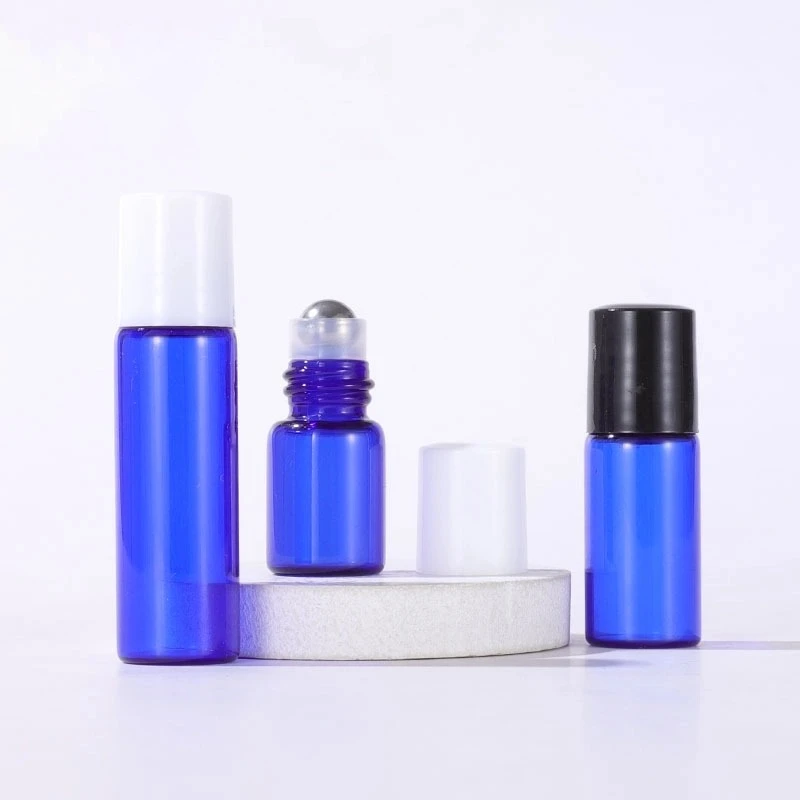
- Cobalt Blue Glass: Bright color, sophisticated visual appeal, primarily blocks some yellow and visible light, but its UV protection is relatively weak.
- Amber Glass: Offers the strongest UV protection, making it the preferred packaging for photosensitive ingredients.
- Green Glass: Provides some UV protection and glare reduction, suitable for plant extract formulas, offering a fresher and more natural look.
- Black Frosted Glass: Almost completely blocks all visible light and UV rays, providing excellent light-blocking performance while possessing a sophisticated matte finish.
2. Manufacturing Principles and Properties of Colored Glass
Colored glass is not simply dyed glass; rather, specific metal oxides are added during the glass-melting process to give the glass a uniform color.
-
- Different colors are created through the use of metal oxides: adding cobalt oxide creates cobalt blue glass; adding iron oxide and a combination of sulfur and carbon creates amber glass; adding chromium oxide creates green glass.
- Different colors correspond to different light-blocking properties: the darker the color, the higher the concentration of metal oxides, and the stronger the ability to block specific wavelengths of light.
- Maintaining the stability and safety of the glass itself: Like transparent glass, colored glass is chemically inert, does not release harmful substances, and does not react with oily or acidic formulations, making it suitable for long-term storage of perfumes, essential oils, and highly active skincare ingredients.
💙 How UV Light Damages Beauty Formulas
1. Ultraviolet Light Causes Perfume Fragrance Deterioration
Most fragrance molecules in perfumes have unsaturated chemical bonds and are extremely sensitive to ultraviolet light. When perfume is exposed to sunlight or strong light for extended periods, the following changes occur:
-
- Fragrance molecules are damaged: Natural fragrance components, especially citrus and floral notes, are prone to photolysis under ultraviolet light, leading to a weakening or disappearance of the original fragrance.
- Fragrance notes evaporate faster: Light energy accelerates molecular movement, causing abnormal evaporation of top and middle notes. A fragrance that would normally last all day may dissipate within hours.
- Fragrance layers change: When certain fragrance notes are damaged, a “break” occurs in the originally balanced fragrance structure, potentially producing a pungent or rancid odor.
2. Light Exposure Affects Active Ingredients in Skincare
The active ingredients in skincare formulas are more “fragile” than the average consumer imagines. Ultraviolet (UV) light can damage their stability in several ways:
-
- Vitamin C is easily oxidized: Vitamin C is extremely sensitive to light. High-concentration vitamin C serums in transparent bottles change color under light, significantly reducing their activity.
- Plant essential oils experience decreased stability: Terpenes in natural extracts are easily oxidized and polymerized under light, not only reducing their efficacy but also potentially causing skin irritation.
- Natural formulas are more prone to discoloration or loss of efficacy: Formulas containing plant pigments, polyphenols, or anthocyanins are more likely to discolor, precipitate, or lose their original soothing and anti-inflammatory effects under light.
If a product exhibits any of the above changes, it indicates that light exposure has caused irreversible damage. Choosing the right light-protected packaging to maximize the protection of the active ingredients is the first line of defense in delaying these deteriorations.
💙 How Tinted Glass Protects Formulas
1. Blocking UV and Visible Light
The core protective mechanism of tinted glass is to physically reduce the impact of harmful light on the formula:
-
- Reducing direct light penetration: Unlike clear glass, tinted glass incorporates metal oxides during manufacturing, causing light to be absorbed or scattered as it passes through the bottle wall.
- Delaying oxidation reactions: By reducing light penetration, tinted glass significantly slows down the oxidation rate of oils, fragrances, and active ingredients, maintaining the original quality of the formula.
- Improving product storage stability: Stability tests show that the same formula exhibits 2-3 times longer discoloration and deactivation time in amber-tinted glass bottles compared to clear glass bottles.
2. Reduce the evaporation rate of fragrances and essential oils
For perfumes, essential oils, and fragrance products, tinted glass offers additional protection from an evaporation perspective:
-
- Maintaining the integrity of fragrance layers: Light accelerates the dissipation of the most volatile top notes. Tinted glass effectively slows down this process, allowing the top, middle, and base notes of the fragrance to remain balanced for a longer period.
- Helps extend product shelf life: Colored glass packaging can make the chemical structure of essential oils more stable by reducing light-induced volatilization and oxidation.
💙 Branding Benefits of Tinted Glass
1. Enhance Brand Professional Image
Packaging color not only affects aesthetics but also subtly conveys a brand’s professional attitude.
-
- It conveys the concept of “high-quality protection”: Dark glass bottles often give the first impression of “this brand is professional and understands how to protect active ingredients.”
2. Meet Environmental and Sustainability Trends
Environmental protection is no longer just a “bonus,” but a “basic requirement” for an increasing number of consumers.
-
- Glass is recyclable: Unlike plastic, glass can be recycled and reused an unlimited number of times without losing its purity. Colored glass is accepted in recycling systems just like clear glass, making it ideal for brands building green supply chains.
💙 Conclusion
A comprehensive analysis of light protection, ingredient stability, and brand value clearly shows that tinted glass is no longer merely a “decorative option” for cosmetic packaging, but a core component of functional protection.
With the continued growth of clean beauty, natural skincare, and sustainable consumption trends, the market demand for functional light-protecting packaging will further expand. In the future, tinted glass will not only occupy a more important position in the fragrance and skincare sectors, but will also drive the entire beauty industry towards a more scientific, environmentally friendly, and trustworthy direction.
Last Updated: 2026/05/29

 English
  Italian