
 Italiano
 Português
 Amazon
 Ebay
Ebay
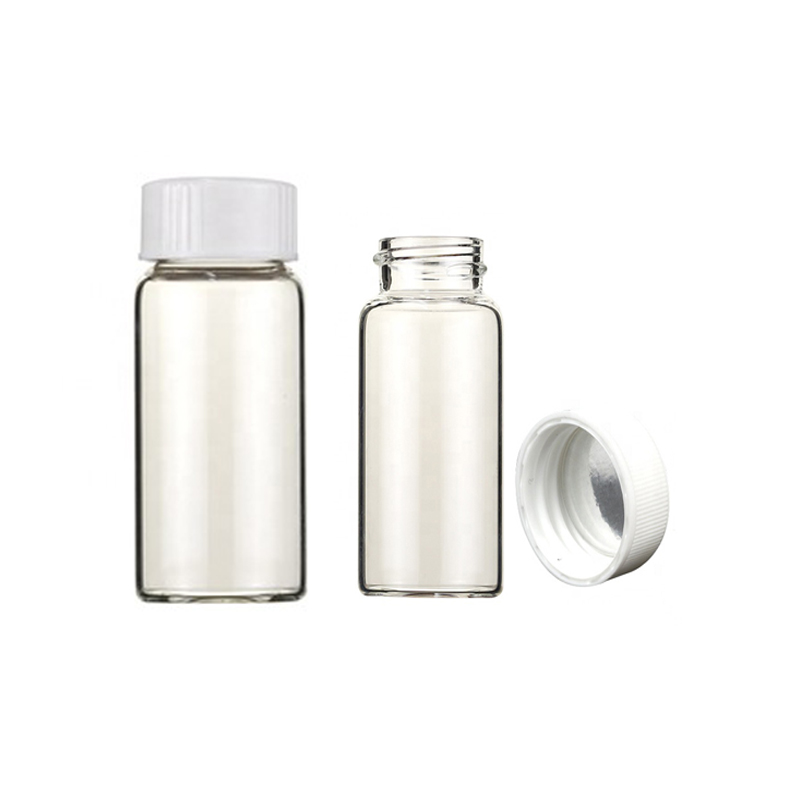
Scintillation Vials: Precision in Nuclear Medicine
🌟 Introduction
Nuclear medicine is a branch of medicine that utilizes radionuclides for the diagnosis and treatment of diseases, with important applications in fields such as oncology, cardiovascular and neurological diseases. Drug tracers, as its core tool, enable the visualization and quantitative tracking of dynamic processes in vivo. In order to ensure dose control of tracers. Evaluation of pharmacokinetic parameters and safeguarding radiation safety, precise quantitative analysis tools are especially critical.
Scintillation vials are important containers used for radioactivity measurements in liquid scintillation counting methods. Studying and optimizing the use of scintillation vials can help improve the accuracy and reproducibility of quantitative analysis of radioactive samples in nuclear medicine. This will not only accelerate the development process of drug tracers, but also help their safe translation to clinical applications and promote the development of individualized precision medicine.
🌟 Technical Principle of Scintillation Vials
1. Liquid scintillation counting technology
Liquid scintillation counting is a highly sensitive radioactivity measurement technique widely used in nuclear medicine and biological sample analysis. Detection efficiency is dependent on a number of key factors including the chemical composition of the scintillation fluid. The light transmission of the vessel and the ability to control background noise.
2. Characterization requirements for scintillation vials
In order to ensure the accuracy and reproducibility of the measurements, the scintillation vials must fulfill the following requirements:
-
- Material selection: low background radiation materials such as low potassium glass or high density polyethylene are preferred to minimize interference with the signal.
- Sealing performance: Ensure that the container is sealed to prevent the leakage of volatile organic solvents or radioactive samples and enhance operational safety.
- Chemical compatibility: Good resistance to a wide range of scintillation fluids, solvents and biological samples to avoid container degradation or sample contamination.
3. Comparison with other packagings
Compared with ordinary laboratory centrifuge tubes, scintillation vials have higher detection sensitivity and lower quenching effect, which are especially suitable for trace radioactivity analysis. However, there are some limitations, such as high manufacturing cost and the need to use with a special liquid scintillation counter, which limits its popularity in some laboratories.
🌟 Application Scenarios in Quantitative Analysis of Drug Tracers
1. Preclinical studies
Radiolabeled drugs are widely used for pharmacokinetic studies in the early stages of new drug development. By liquid scintillation counting, the concentration and distribution, metabolism and excretion pathways of radiotracer in plasma, urine and tissues can be quantified.
2. Quality control and standardization
Radiopharmaceuticals require precise activity calibration during production and use. Scintillation vials can be used to compare standard-derived samples to ensure metrological consistency. At the same time, by periodically measuring the rate of radioactive decay during storage, the stability of the drug can be assessed and an expiration date standard can be established.
3. Novel tracer development
In the development of targeted drugs or molecular probes, scintillation vials support the quantitative analysis of the binding efficiency of the radiolabel to the target.
4. Environment and security monitoring
During nuclear medicine experiments or drug development, radioactive substances may remain in the experimental waste stream. The use of scintillation vials to detect radioactivity in waste liquid samples can detect potential contamination risks in a timely manner, ensuring operator safety and environmental compliance.
🌟 Optimization and Challenges
1. Direction of technical optimization
To enhance the application of liquid scintillation counting in the quantitative analysis of drug tracers, researchers are advancing the optimization in several technical dimensions:
-
- Quenching effect correction: Chemical quenching and color quenching can significantly affect the counting accuracy. Currently, strategies such as external labeling and internal labeling are often used for systematic correction to improve the comparability and accuracy of data.
- Automation and high-throughput technology: In order to meet the demand for large-scale sample analysis, automated sampling, encapsulation and counting equipment has been gradually introduced to make the sample processing process more efficient and controllable, and to reduce perceived errors.
2. Current challenges
Despite advances in technology, there are still several technical and regulatory barriers to liquid scintillation counting:
-
- Detection limitations of low-energy beta rays: For radionuclides with lower energies, the released particles are less likely to penetrate the sample liquid or container wall, resulting in low signal-to-noise ratios, which affects quantitative accuracy.
- Scintillation liquid waste management pressure: Many scintillation liquids contain organic solvents, which are hazardous chemicals and are subject to strict environmental regulations during handling and disposal, increasing the complexity and cost of experimental operations.
3. Future development trends
In order to meet the above challenges and respond to the needs of green and intelligent development, the following directions are receiving attention from the industry:
-
- Degradable scintillation vials materials: Develop new bio-based plastics or composite materials that have good optical properties and are easy to degrade and dispose of, which is expected to alleviate environmental pressure.
🌟 Conclusions and Outlook
Scintillation vials play an irreplaceable and central role in the quantitative analysis of radioactive samples in nuclear medicine. Its good sealing, optical performance and chemical compatibility guarantee the high sensitivity and accuracy of liquid scintillation counting technology, which provides solid support for the development, quality control and safety assessment of drug tracers.
With the continuous progress of technology, the application of scintillation vials is also developing in a smarter and sustainable direction. In the future, it is expected that the signal interpretation and quenching correction can be optimized by artificial intelligence algorithms to improve the detection efficiency and accuracy. At the same time, the promotion of environmentally friendly materials and micro-integrated systems will further simplify the operation process, reduce the environmental burden, and promote the quantitative analysis technology of nuclear medicine to a new stage of green, efficient and accurate.
Last Updated: 2025/06/05

 English
  Italian