
 Italiano
 Português
 Amazon
 Ebay
Ebay
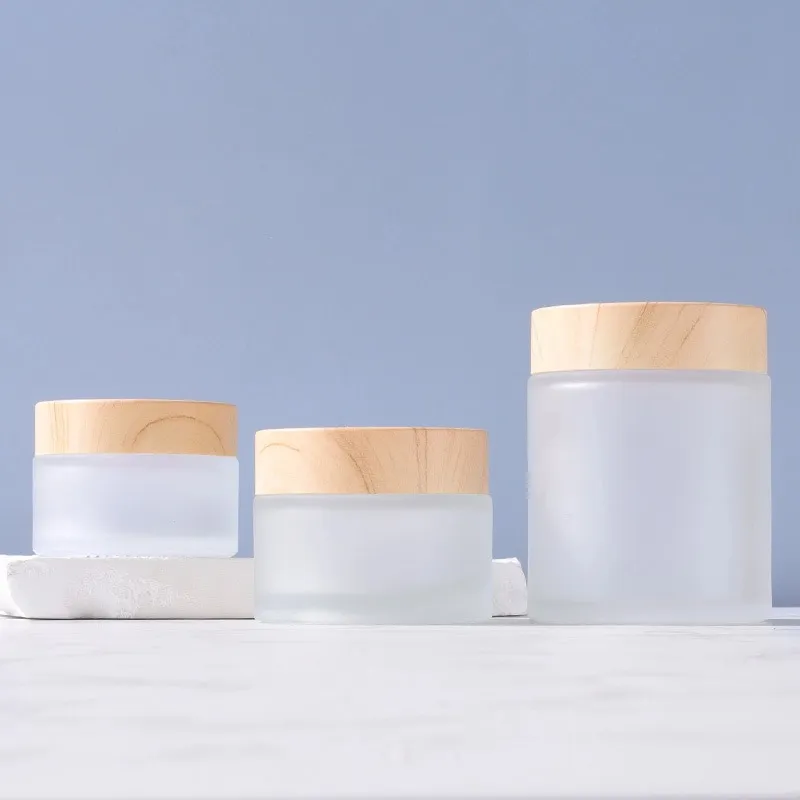
Why do Skincare Brands Love Glass Bottles with Wood Grain Lids?
🪵 Introduction
Woodgrain lids with glass jars have become a dominant choice in the skincare market, with many luxury skincare brands adopting this packaging style. This type of packaging not only visually conveys a warm and natural texture, but also fits in well with the brand’s environmental philosophy and minimalist lifestyle.
In particular, the use of frosted glass bottles with wooden screw caps has gradually become an iconic element in luxury skincare packaging. It is not only found in mid-range and high-end product lines such as face creams, eye creams, essence creams, etc., but has also become the preferred solution for niche handmade skincare brands to create a sense of “hauteur”.
🪵 The Significance and Advantages of Wooden Cosmetic Jar Lid
1. Conveyance of natural and environmental protection concepts
First of all, log material represents a philosophy of life that returns to nature and respects ecology. In today’s world of “clean beauty” and “green skincare”, the use of natural wood lids conveys the organic nature of the product itself, which is in line with the modern consumer’s desire for a “natural and environmentally friendly” product. eco-friendly skincare packaging”.
In addition, many brands will use renewable wood such as bamboo, beech, oak, etc. as lid materials, these woods are not only environmentally friendly and biodegradable, but also easy to process and mold, the main brand to reduce the carbon footprint, to create a real sense of sustainable packaging solutions.
2. Unique texture and temperature
Compared with the cold metal cover or cold plastic cover, the surface of the log cover is warm and natural, with a soft touch, giving the user a kind of “skin-friendly” psychological implication. This “sense of temperature” is unique to wood lid skincare jar and greatly enhances the overall user experience.
At the same time, the natural texture and color difference of wood makes each product unique, just like the existence of handicraft version, is more customized sense of the product, and stand out in the packaging homogenization of the market.
3. Key Visual Symbols for Brand Differentiation
In a dazzling array of skincare shelves, the design of a wooden lid with frosted glass instantly catches the consumer’s eye. Compared to FMCG brands that use a lot of plastic, this packaging not only reinforces the brand’s premium positioning, but also creates a stronger emotional connection through natural elements.
Especially in the age of social media, consumers are more and more inclined to share high-value, textured product packaging, and the wooden lid has thus become a visual asset that helps brands develop a unique aesthetic language and recognition.
🪵 The Practical and Aesthetic Value of Glass Bottles
In the skincare market, glass bottles are more than just a packaging container, they are a medium that is both functional and aesthetically pleasing. Especially in the high-end market, glass skin care products have become a symbol of the brand’s bottle and philosophy.
1. Excellent product preservation
Glass has excellent chemical stability and will not react with the active ingredients in skin care products, making it ideal for maintaining the purity of formulations and stabilizing efficacy. For products containing high concentrations of antioxidant ingredients (e.g. glass jar for vitamin serum, acid-containing products, etc.), glass effectively prevents degradation of the ingredients and prolongs their life cycle.
In particular, brown glass bottles or dark-colored coated glass with good UV protection can effectively block sunlight damage to photosensitive ingredients, to ensure that the efficacy of the product is maximized.
2. High-end visual and tactile experience
The visual effect of glass is far superior to that of conventional plastic packaging. The frosted glass bottle brings a hazy and soft aesthetic, together with the minimalist label design, creates a pure and professional skincare impression.
Transparent glass, on the other hand, emphasizes the “realism” of the product itself, allowing the user to visualize the texture and color of the contents. At the same time, the thickness of the glass bottle also conveys a “weighty” psychological expectations, reinforcing the sense of value of the product and the use of rituals, commonly used in “luxury cosmetic glass jar” or serum containers.
3. Eco-Friendly and Sustainable Recycling
Against the backdrop of a growing global consumer focus on environmental protection, glass has given rise to 100% recyclability that is favored by an increasing number of brands. Compared with plastic, glass does not release harmful substances or degradation products, which is not only safe and environmentally friendly, but also easy for users to reuse or DIY reuse in the long run.
For brands that emphasize environmental awareness and sustainable development, glass packaging is not only a material choice, but also a reflection of responsibility and attitude. Combined with removable lid design and matching replacement packs, it further extends the product life cycle and helps green consumption.
🪵 Consumer Psychology of Wood and Glass Packaging
In the increasingly competitive beauty care market, packaging is no longer just a functional shell, but also an important carrier for brands to communicate with users and evoke emotional resonance. With its unique sensory contrast and natural gas quality, the combination of log and glass packaging builds a warmer and more quality product impression in consumers’ minds.
1. Multi-dimensional sensory experience
The transparency and smoothness of the glass, combined with the roughness and texture changes of the wood, form a strong contrast between the visual and tactile senses, creating a “cold end of the blend” experience. This multi-dimensional sensory stimulation not only satisfies modern consumers’ pursuit of aesthetics, but also enhances the “unboxing ceremony” of the packaging.
When users come into contact with this kind of natural texture packaging, they not only see the product, but also feel the expression of the brand’s concept in the material.
2. To arouse emotional connection and brand resonance
“Natural materials” not only bring the appearance of beauty, but also carry the emotional symbols of purity, sustainability and craftsmanship. When consumers use a skin care product with a solid wood cap, they will naturally associate it with forests, nature, organics and environmental protection, thus establishing a deeper level of psychological trust and identity with the brand.
This is precisely the reason why eco-conscious skincare design has become so popular in recent years – brands are not just selling products, they are also selling a kind of attitude and values.
3. Reinforce the sense of value of the product to support the pricing strategy
Compared with the common plastic packaging, the combination of wood and glass naturally sends a signal of “high cost = high value”. Research has shown that consumers are more likely to pay a premium for products that look and feel good, especially when the packaging reflects fine craftsmanship and differentiated design.
The Premium Cosmetic Bottle is designed in a non-verbal way to signal to the consumer, “This is not an ordinary product, but a work of art to be treasured.” — This mid-to-high-end brand’s pricing strategy provides psychological support.
🪵 Potential Controversies and Limitations
Although the packaging design of wood and glass represents nature, high-end and environmental protection, it still faces some controversies and practical challenges that cannot be ignored in practical application and consumer perception.
1. Cost issues: significant pressure on production and logistics
Conformal packaging made of wood and glass is significantly more costly than plastic solutions, both in terms of raw material procurement, processing technology and transportation and packaging. This not only puts pressure on a brand’s gross profit structure, but may also be passed on to end-point pricing, affecting the purchase intentions of some price-sensitive consumers.
Especially in mass production or cross-border transportation scenarios, glass bottle transportation cost has become a non-negligible burden in brand operations.
2. Practical shortcomings: the material risk of fragility and deformation
From the user experience level, although glass has good stability and visual aesthetics, fragility is always its hard injury. Whether it is inadvertently dropped in home use, or in the express transportation of the breakage rate, all affect consumer satisfaction.
On the other hand, although the wooden bottle cap has a warm texture, but in the humid or long-term use of the environment, there may be moisture absorption and expansion, deformation or mold risk, which in turn affects the sealing and product quality.
3. The environmental controversy of excessive packaging
Ironically, natural materials that originally carry the concept of “sustainability” may be labeled as “environmentally friendly in form but wasteful in reality” if they are not properly reduced in design.
Some brands over-emphasize the visual impact of their packaging, investing in heavy glass and complex wood finishes, but neglecting the ingredients, formulas, or efficacy of the products themselves, leading to consumer dissatisfaction with “heavy packaging, light on content”. This not only undermines the credibility of the brand, but also goes against the current mainstream trend of “rational consumption and simple design”.
✅ Brand suggestion: In the pursuit of packaging aesthetics at the same time, should be “function + emotion + environmental protection” as a balance point, clear packaging recyclability or reuse path, supplemented by transparent raw material sources and product composition advantages, reduce consumers doubt on the “flashy but not real”.
🪵 Conclusion
The log-lidded glass bottle is not only a form of packaging, but also a visual representation of the three values of “nature, luxury and environmental protection” of contemporary high-end skincare brands.
It conveys to consumers the philosophy behind the product through the real touch and visual purity of the material: respecting nature, valuing the ingredients, and pursuing both sensory and emotional experiences. For this reason, this design language has gradually become the visual symbol of premiun skincare, from popular luxury brands to many emerging high-end niche brands.
Future trends: material innovation and reduction thinking
As the global beauty industry enters a new era of sustainable development, consumers are demanding more “eco-authenticity” from packaging. In the future, glass bottles with wooden lids will also face a double upgrade in function and concept:
-
- Introduce recycled wood and lightweight glass to reduce carbon footprint while maintaining aesthetics;
- Promote the design of disassembled structures to facilitate sorting and recycling, or consumers’ confidence in DIY for secondary use;
- To reinforce the “real efforts behind sustainable packaging” through brand education, so as to dispel the doubt of “over-packaging”.
✅ Finding a balance between aesthetics and environmental protection is the core charm of the log+glass packaging; and only through continuous innovation and honest communication can this “luxury but not flimsy” design concept truly become part of the brand’s long-term value.
Last Updated: 2025/07/29

 English
  Italian